
Wedding Tips
How to Choose Your Bridal Entrance Song for a Wedding in Italy
Your bridal entrance song needs to suit the ceremony, the setting and the length of the aisle. Here is how to make the music land at exactly the right moment.
The doors open. Everyone turns. Your partner sees you, perhaps forgets how breathing works for a few seconds, and the music begins. This is why the bridal entrance is one of the most important musical moments of the entire ceremony.
But choosing it is not simply a matter of finding a beautiful song. A track can give you goosebumps in the kitchen and still feel completely wrong in a solemn church or across a ten-second garden aisle. The real magic comes from matching the music to the ceremony, the setting and the procession itself.
Before you disappear into a playlist for three days, let’s work through the decisions that actually matter.
1. Start with the ceremony, not the playlist
First, ask what kind of ceremony you are having: religious, civil or symbolic. Then consider the atmosphere. Is it formal and solemn, intimate and relaxed, or somewhere happily in between?
A church naturally calls for a different musical approach from a garden ceremony. The acoustics, the surroundings and the structure of the service all shape how a piece feels. Music that sounds delicate outdoors may become grand inside a resonant church; a contemporary love song that works beautifully beneath the trees might feel less comfortable during a religious entrance.
There is also a third question: how long will the procession take, and who is entering before you? Measure the route rather than judging it from a venue photograph. Wide-angle lenses have been known to turn a modest garden path into the Appian Way.
Once you understand the ceremony type, the desired mood and the actual walking time, your shortlist becomes much clearer. You are no longer choosing a song in isolation. You are choosing the soundtrack to a specific scene.
If you are also deciding who should perform it, our guide to ceremony musicians and instrumental line-ups explains how setting, repertoire, logistics and budget affect the choice.
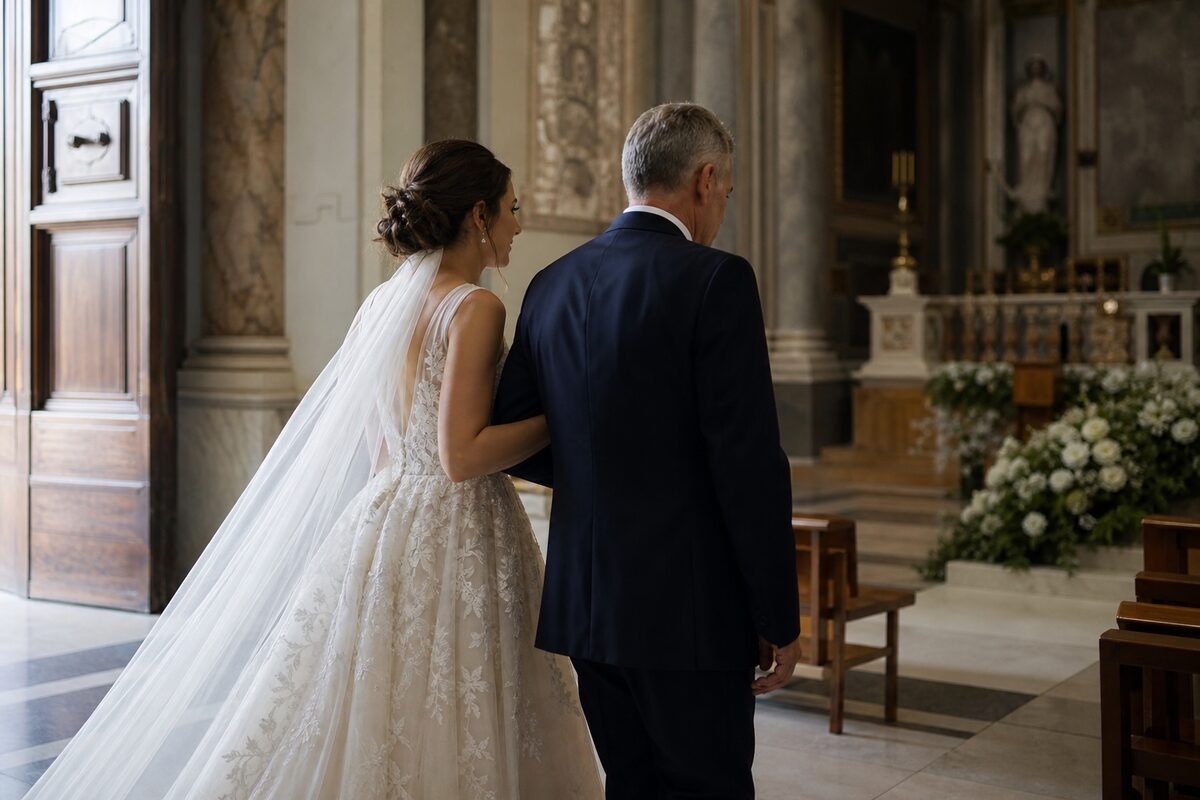
2. For a church entrance, let elegance—and silence—lead
Religious ceremonies usually have a more solemn atmosphere, so classical and cinematic instrumental pieces are often the strongest choices. Gabriel’s Oboe by Ennio Morricone, Pachelbel’s Canon in D and Bach’s Air on the G String can all create emotion without overwhelming the moment.
The traditional wedding marches by Mendelssohn and Wagner remain perfectly valid too. They are instantly recognisable and undeniably ceremonial, although they can feel more conventional than other options. Familiar is not a bad word, by the way. If a piece feels right to you and suits the service, it does not need to win an originality competition.
One of our most important tips for a church entrance is to protect the silence immediately beforehand. If you are the only person making a formal entrance, avoid filling every second with background music. Closed doors, a quiet congregation and a brief pause create genuine anticipation. When the doors open and the first notes arrive, the contrast does half the emotional work.
Silence can make planners nervous because it looks suspiciously empty on a schedule. Musically, however, it is anything but empty. It gives the entrance room to breathe.
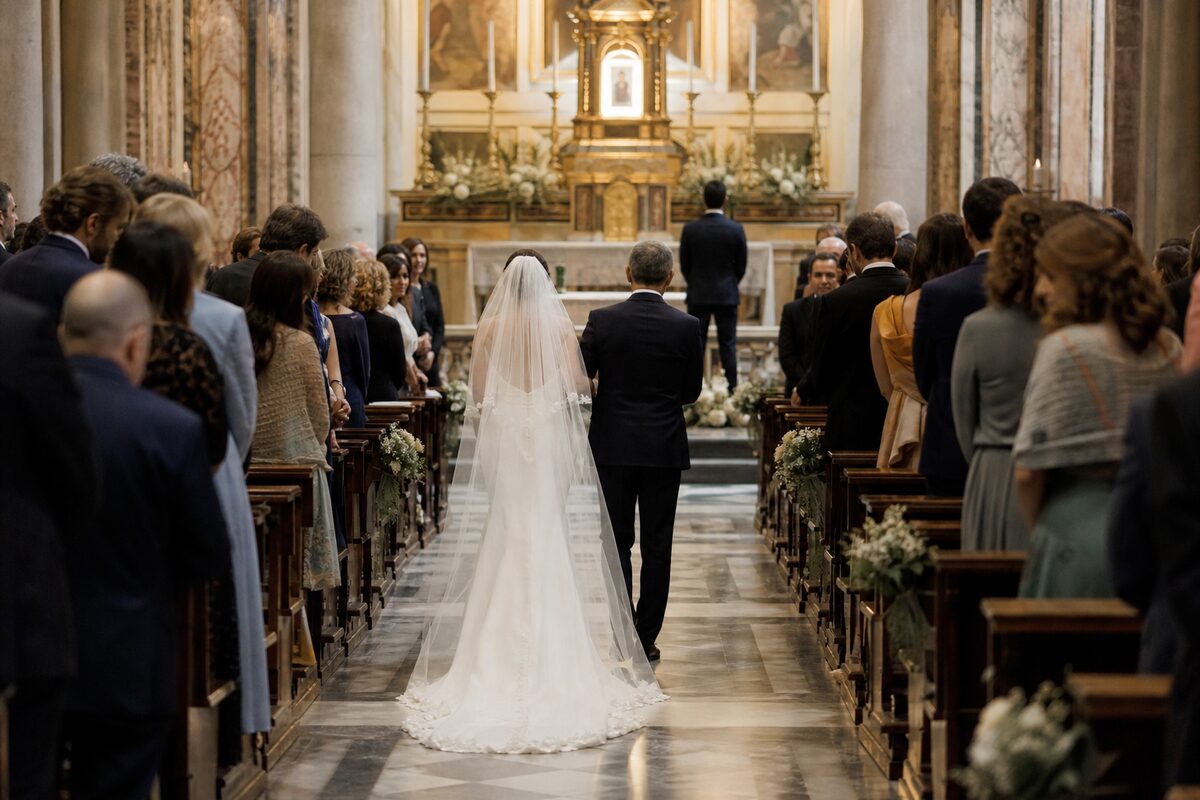
3. Outdoors, enjoy the freedom—but keep the entrance intentional
A civil or symbolic garden ceremony gives you much more musical freedom. Classical selections still work beautifully, but contemporary songs can feel equally natural. A Thousand Years by Christina Perri, piano music by Ludovico Einaudi, Can’t Help Falling in Love and Your Song are all examples of pieces that can suit an elegant outdoor entrance.
The key word is still “suit”. Loving a song is an excellent starting point, but consider its pace, mood and arrangement. Can you walk comfortably to it? Does its emotional tone fit the ceremony? Will a vocal version support the moment, or would an instrumental arrangement leave more space for what is happening in front of your guests?
Background music is easier to use outdoors because the setting is open and your approach may be partly visible from a distance. Even so, the bridal entrance must sound like a deliberate new chapter, not simply the next track wandering out of a playlist. A clear pause, musical cue or change in arrangement can mark the transition.
Plan the ending as carefully as the beginning. The music should resolve naturally once you reach the ceremony area and face your partner—not carry on while everyone wonders whether they should wait for another chorus.
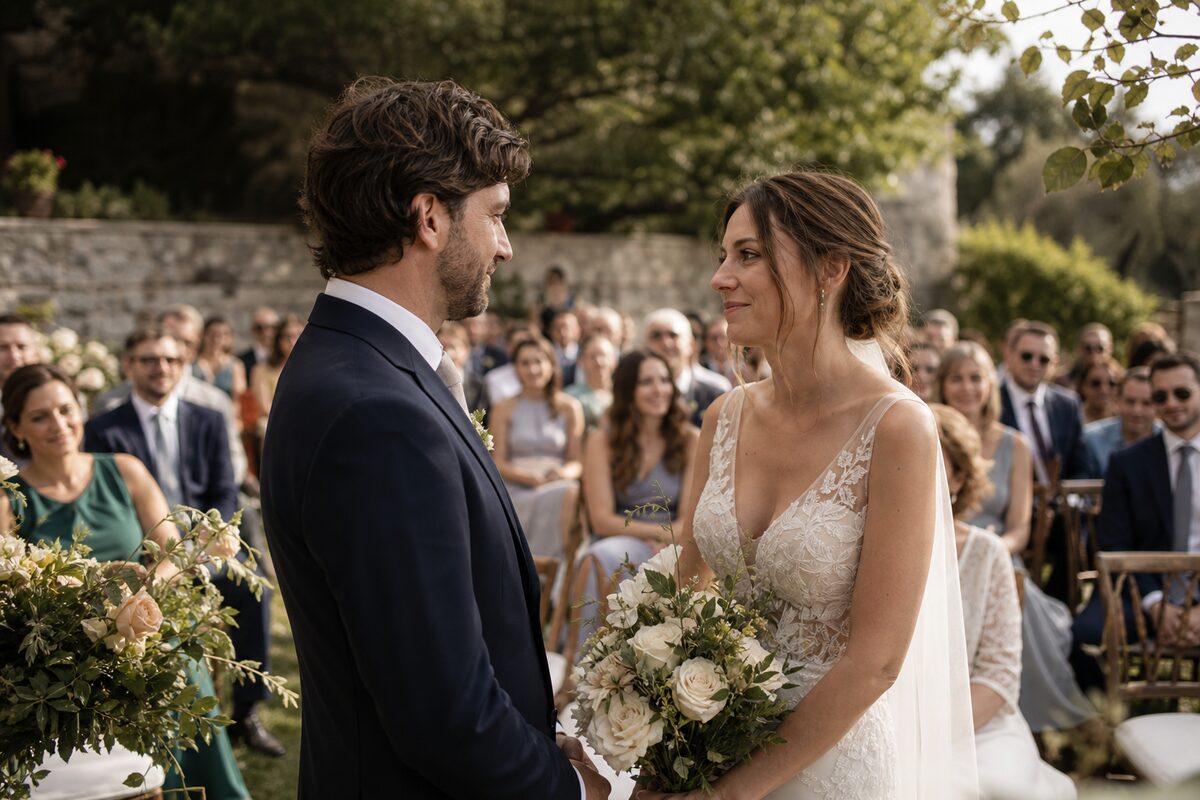
4. A short aisle often needs just one song
If bridesmaids are entering before you, the next decision is whether the procession needs one song or two. The aisle length usually gives you the answer.
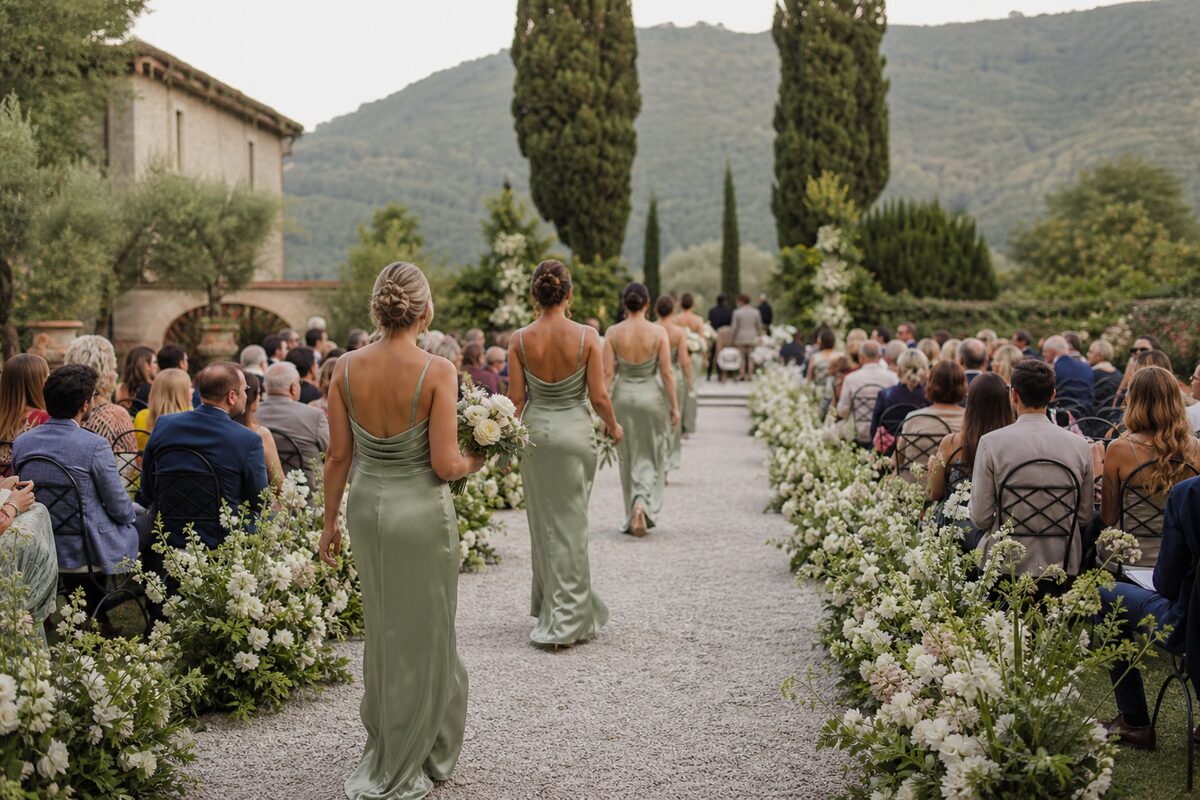
At an intimate garden wedding with a short route, bridesmaids and bride can comfortably enter during the same piece. One song keeps the procession flowing and avoids squeezing an unnecessary musical change into a very small window. Changing tracks after twenty seconds can feel less like a dramatic reveal and more like someone has become overenthusiastic with the skip button.
Choose a piece with enough shape to support both parts of the entrance. The bridesmaids can begin during the opening, leaving a stronger phrase or musical lift for your appearance. This gives you distinction without breaking the flow.
Do a simple timed walk before confirming the plan. Include realistic spacing between each person and allow for a slightly slower pace on the day. Processions rarely move with laboratory precision—nor should they—but a rehearsal will show whether the chosen song gives everyone enough room.
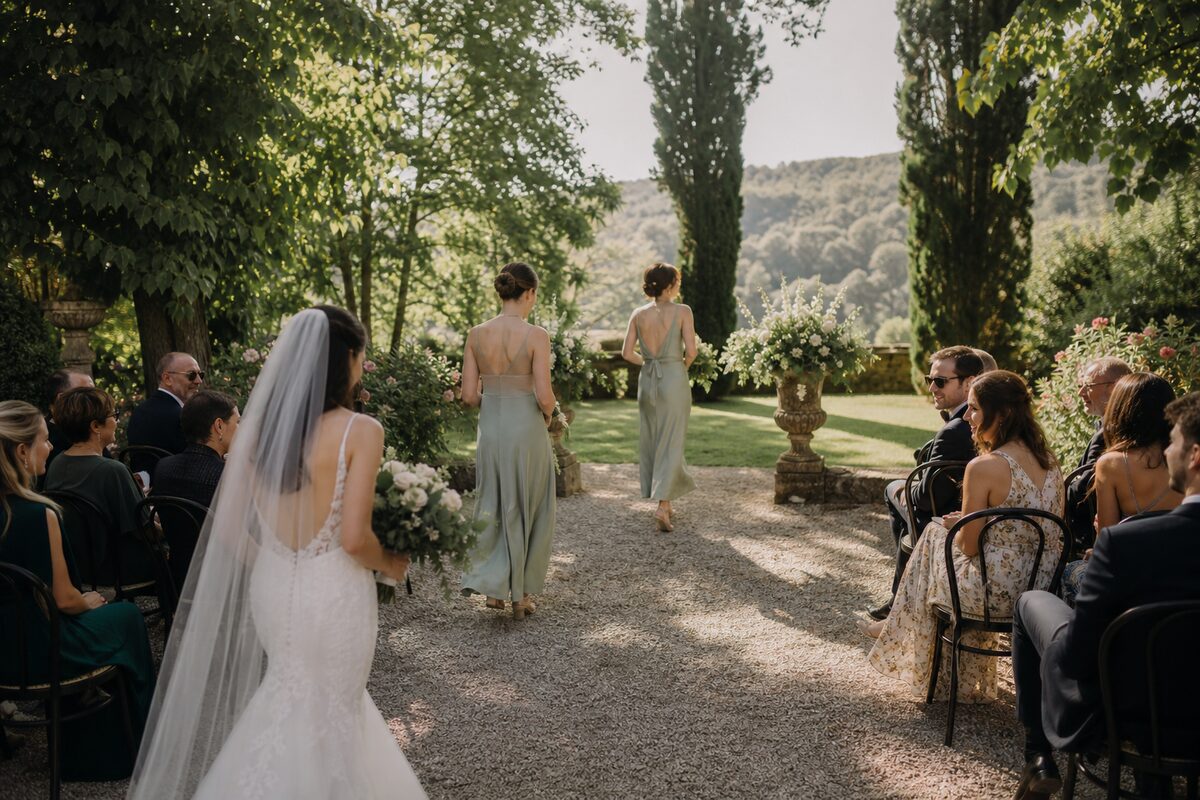
5. Give a long procession enough musical space
A large garden or venue with a long aisle is a different creature. If several bridesmaids need one or two minutes to reach the ceremony area and you require a similar amount of time, one song may have to stretch too far.
Two separate pieces can work much better. The first accompanies the bridesmaids; the second is reserved for you, giving the bridal entrance its own identity and a stronger emotional climax. The songs should belong to the same musical world, but they do not need to sound identical. Think connected chapters, not an abrupt leap between two radio stations.
This is where practical coordination matters. Time the full route, decide where each person will wait and identify the exact cue for your music to begin. Musicians also need to know how the piece should finish if you reach the ceremony area earlier or later than expected. A suitable arrangement can be extended, shortened or brought to a graceful close without making the ending sound chopped off.
An experienced wedding music provider can help calculate these timings, recommend arrangements and coordinate the start and finish with the procession. That preparation stays mostly invisible on the day—which is precisely the point. You should be walking towards your partner, not mentally counting bars.
Choose the moment, then choose the music
The best bridal entrance song is not necessarily the grandest, newest or most unusual. It is the one that belongs in your ceremony and works with the route you will actually walk.
Match the music to the setting, decide whether the procession needs one piece or two, protect the right moments of silence and plan a clean musical ending. When those details work together, the entrance feels effortless—even though, like most effortless things at weddings, somebody has quietly done their homework.
Then the doors open, the music begins and you can forget the logistics. That part is yours.
Want your entrance music to land at exactly the right moment?
Tell us about your ceremony, aisle and procession. We can help you choose the right arrangement and build a musical entrance that feels natural from the first note to the altar.
Tags
- Bridal Entrance
- Ceremony Music
- Church Weddings
- Live Wedding Music
- Outdoor Ceremonies
- Wedding Procession
- Wedding Song Ideas
Join the party!
Got a question or something to share? Grab the mic and drop us a comment!
Loading comments…